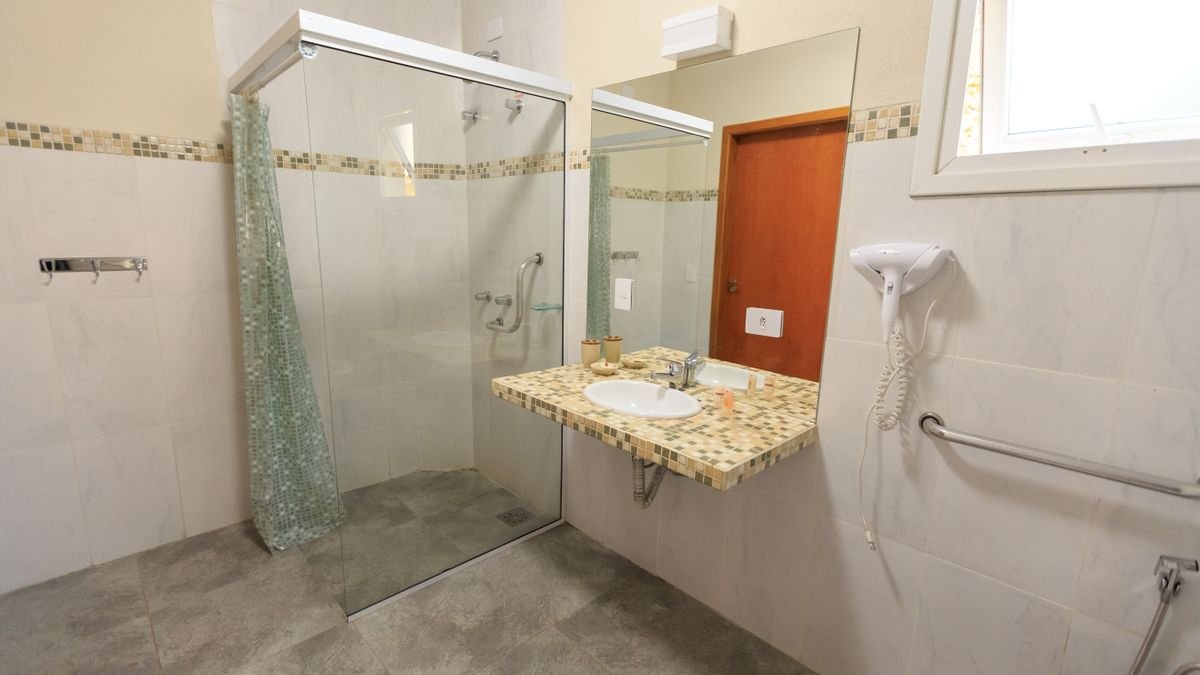
A stairlift costs less than three months of the care hours it replaces. A level-access shower can turn a daily two-person assisted wash into something a person does alone. Adaptations are the most under-used part of the system, largely because the route to them is not obvious and the money involved sounds like it must be difficult to get.
It is not especially difficult. The assessment is free, small items are usually free, and there is a mandatory grant of up to £30,000 in England — administered locally by Adur & Worthing Councils — that a lot of people never apply for because nobody told them it existed. This guide sets out the whole route: who assesses, what is free, how the grant is means-tested, what things cost, how long it takes and how to speed it up.
Start with the occupational therapist, not the builder
Almost everything begins with a free occupational therapy assessment. In this area, West Sussex County Council arranges OT assessments as part of adult social care. Ask the council directly, or ask the GP or hospital team to refer. It is not means-tested, and you do not need to be receiving any other service to get one.
An occupational therapist watches the person do the things that have become hard — getting out of bed, using the stairs, getting into the bath, cooking, getting through the front door — and works out what would fix it. That is a different question from what a showroom would sell you, and the answer is often cheaper and stranger than expected: a second stair rail rather than a stairlift, a different bed height rather than a hoist, the toilet door rehung to open outwards.
The OT’s recommendation is also the key that unlocks funding. Where major works are needed, the occupational therapist makes a formal recommendation to Adur & Worthing Councils, and that recommendation starts the Disabled Facilities Grant process. Buying a stairlift privately first and asking for the money back afterwards does not work — grant-funded work must be approved before it starts. Ask for a care needs assessment at the same time; the two often run together.
Minor adaptations and equipment: usually free
Councils in England must provide equipment and minor adaptations costing up to £1,000 free of charge after an assessment. There is no means test on these. West Sussex County Council supplies them through its community equipment arrangements, and this covers most of what makes the immediate difference:
- Grab rails, stair rails, half-steps and handrails at the front door
- Raised toilet seats, toilet frames, over-bath boards and shower seats
- Bed levers, bed raisers, chair raisers and perching stools
- Key safes, external lighting, and small ramps at thresholds
- Assistive technology such as pendant alarms and sensors
This is the part people buy unnecessarily. Before ordering a rail off the internet, ask for the assessment — a rail in the wrong place is worse than none, because it gets trusted. These items also arrive far faster than grant-funded work, often within weeks, which matters when someone is coming home from hospital. See care after hospital discharge.
The Disabled Facilities Grant
The Disabled Facilities Grant (DFG) is a mandatory grant, meaning the council must award it if the legal conditions are met. In England the maximum mandatory grant is £30,000. Locally, Adur & Worthing Councils state that discretionary top-up grants of up to a further £40,000 may be available in some cases for larger works — worth asking about if the recommended scheme is expensive.
The grant is for works that are necessary and appropriate for the disabled person and reasonable and practicable for the property. Typical approved works include:
- Level-access showers or wet rooms replacing a bath
- Stairlifts and through-floor lifts
- Ramps, widened doorways and improved access to the front and back doors
- A downstairs bedroom or bathroom, sometimes as an extension
- Adapted kitchens, heating and lighting controls
- Safe access to and around the garden
Who qualifies
You must be disabled within the meaning of the legislation — which is broad, covering physical disability, learning disability, sensory impairment, progressive conditions, terminal illness, autism, cognitive impairment, mental health conditions and age-related need. You must own the property or be a tenant, and you must intend to live there for at least five years (there is discretion where a condition is terminal or life expectancy is short — say so, because it changes how the case is handled).
Council tenants are excluded from the DFG, but not from adaptations: the council provides them as landlord instead. Housing association tenants apply for the DFG in the normal way, though some associations fund the work themselves.
The means test, and the exception for children
The DFG is means-tested on the income and savings of the disabled person and their partner — not the wider household, not adult children living there. Savings below £6,000 are ignored entirely. If the person receives a means-tested benefit such as Universal Credit, Pension Credit guarantee credit, income-related ESA or income support, they are passported straight to a full grant with no contribution. Adur & Worthing publish an online calculator so you can estimate a contribution before applying.
There is no means test at all where the application is for a disabled child or young person under 18. Parental income and savings are not taken into account. This is the single most commonly missed rule in the whole system, and it means a family that assumes it earns too much to qualify may be entitled to the full £30,000. See children’s complex care at home.
Note also that receiving a DFG does not affect any benefits, and Attendance Allowance at £76.70 or £114.60 a week is not means-tested and is unaffected either way.
The land charge
One thing to know before signing. For owner-occupiers, where the grant exceeds £5,000, the council may register a local land charge so that some of the money is repayable if the property is sold or transferred within ten years of the works being certified complete. The amount that can be demanded is capped at £10,000, and the council must consider hardship, moving for work, health and the need to move to receive care before requiring repayment. Many councils use the power sparingly — ask Adur & Worthing what their policy is in writing.
What things cost, roughly
Prices vary with the property, so treat these as orders of magnitude rather than quotes. They are useful mainly for judging whether a quote is sane.
| Work | Indicative cost | Notes |
|---|---|---|
| Grab rails, half-step, key safe | Usually free via the council | Under the £1,000 minor adaptations rule |
| Threshold or modular ramp | £1,000–£3,000 | Longer runs and turns cost more; planning rarely needed |
| Straight stairlift | £2,000–£5,000 | Reconditioned units are cheaper; check the servicing contract |
| Curved stairlift | £5,000–£10,000 | Made to measure, so longer lead times |
| Level-access shower / wet room | £5,000–£12,000 | The most commonly funded major adaptation |
| Through-floor lift | £12,000–£25,000 | Needs space above and below and structural work |
| Ground-floor bed and bathroom extension | £40,000+ | Where the top-up grant and a contribution usually come in |
| Ceiling track hoist | £3,000–£8,000 | Often cheaper than the extra care hours two-person transfers need |
Timescales, and how to speed them up
The statutory clock is generous to councils: once a valid application is submitted, the authority must notify approval or refusal as soon as reasonably practicable and no later than six months. Works must then be completed within twelve months of approval, though that can be extended by agreement.
In reality the delay is usually before the application — waiting for an OT assessment, then for schedules of work and quotes. Six to twelve months from first phone call to finished bathroom is common. What genuinely helps:
- Make the referral yourself and be specific. Describe what has already gone wrong — falls, missed toilet trips, two people needed for a transfer, a hospital admission — not “she’s struggling”. Urgency is triaged on risk.
- Say if a hospital discharge depends on it. Discharge-related cases are usually prioritised, and an interim solution such as a downstairs bed and a commode can be arranged while the permanent work waits.
- Get the paperwork in one go. Proof of income, benefit award letters, proof of ownership or tenancy and landlord consent are the usual hold-ups.
- Accept interim equipment. A temporary ramp or bath lift now does not weaken the case for the permanent adaptation.
- Chase in writing. The six-month statutory period only starts from a valid application, so establish by email when the council considers the application to have been made.
Renting, landlords and leasehold
Tenants can and do get Disabled Facilities Grants, but written landlord consent is needed before work starts. A landlord cannot be compelled to agree, though refusing a reasonable adjustment can raise Equality Act issues. Approach it practically: most adaptations — a level-access shower, a widened doorway, a ramp — add value or are neutral, and the landlord is not paying. Leasehold flats need the freeholder’s consent too, so start that conversation early; it is frequently the slowest step of all.
VAT: do not pay it
Goods and building work supplied for a disabled person’s own home can be zero-rated for VAT. Under HMRC’s rules for people who are chronically sick or disabled, that covers ramps, widening doorways and passageways, installing or adapting a bathroom, washroom or lavatory, installing and maintaining lifts between floors, plus the associated preparation and making-good work. Mobility and daily living equipment is similarly relieved.
There is no registration to join and no benefit test — you sign a short eligibility declaration for the supplier. Contractors and retailers who deal with this regularly will produce the form; ones that do not may simply add 20% and say nothing. On a £10,000 bathroom that is £2,000, so ask before you accept a quote, and ask whether the price shown already excludes VAT.
When adaptations beat buying more care
This is the calculation worth doing properly. Home care in West Sussex runs £28–£38 an hour, with the Homecare Association putting the minimum sustainable price in England at £34.42 an hour for 2026/27, and live-in care costs £1,400–£1,700 a week. Residential care locally is £1,100–£1,600 a week, nursing £1,400–£2,000.
Against that, an £8,000 wet room that removes a daily assisted bath — say an hour a day, seven days a week — pays for itself in under a year and keeps paying. A stairlift that means one carer instead of two halves the bill for every transfer for the rest of the person’s life. Adaptations are a one-off capital cost that reduces recurring revenue cost, which is exactly the trade families under pressure are worst placed to see.
They are not always the answer. Adaptations do not help with supervision, prompting, company, medicines or night-time need, and a beautifully adapted house that someone is frightened to be alone in has solved the wrong problem. They also take months, so they are poor at solving a crisis. Where the property simply cannot take the work — narrow Victorian stairs, an upstairs flat with no lift — moving may beat adapting, which is worth weighing alongside home care versus a care home.
Where money is tight, look at charitable grants through Turn2us and disability-specific charities, and at whether direct payments could fund equipment more flexibly. If the goal is reducing risk rather than replacing care hours, read falls prevention at home first — the highest-value changes there cost nothing at all.
Find care near you
Tell us your postcode and what you need help with. We pass your details to one vetted CQC-registered agency in your area — you are told who they are, and that they pay us a fee, before anything is sent.
Frequently asked questions
How much is the Disabled Facilities Grant and who pays it?
The mandatory grant in England is up to £30,000, paid by the district council — Adur & Worthing Councils locally — after an occupational therapy recommendation, which West Sussex County Council arranges. Adur & Worthing say discretionary top-ups of up to a further £40,000 may be available for larger works. The grant does not affect benefits.
Is the Disabled Facilities Grant means-tested?
For adults, yes — on the income and savings of the disabled person and their partner only, with savings under £6,000 ignored and means-tested benefits passporting you to a full grant. For a disabled child or young person under 18 there is no means test at all: parents’ income and savings are not counted, whatever they earn.
Are grab rails and small adaptations free?
Usually. Councils must provide equipment and minor adaptations costing up to £1,000 free of charge following an assessment, with no means test. That covers grab rails, stair rails, raised toilet seats, bed and chair raisers, half-steps, key safes and small ramps. Ask West Sussex County Council for an occupational therapy assessment rather than buying items yourself.
Can I get adaptations if I rent my home?
Yes. Private and housing association tenants can apply for a Disabled Facilities Grant, but you need the landlord’s written consent before work starts, and the freeholder’s too in a leasehold flat. Council tenants cannot apply, because the council provides adaptations as landlord instead. Start the consent conversation early — it is often the slowest step.
How long does a Disabled Facilities Grant take?
The council must decide within six months of a valid application, and works must finish within twelve months of approval. In practice the wait is usually before that, for the OT assessment and quotes, so six to twelve months overall is common. Flag hospital discharge or a serious fall risk, get paperwork in early, and accept interim equipment meanwhile.
The Care Panel is an independent publication. We are not a care provider and are not regulated by the Care Quality Commission, because we do not deliver care. Always check a provider’s own CQC registration and inspection report before you commit.
Written and fact-checked by The Care Panel. Last updated September 2026. Sources: gov.uk guidance on Disabled Facilities Grants and on VAT relief for disabled people, the Housing Grants, Construction and Regeneration Act 1996, Adur & Worthing Councils’ Disabled Facilities Grant pages, and West Sussex County Council occupational therapy information. Costs are indicative; get written quotes. General information, not legal or financial advice.