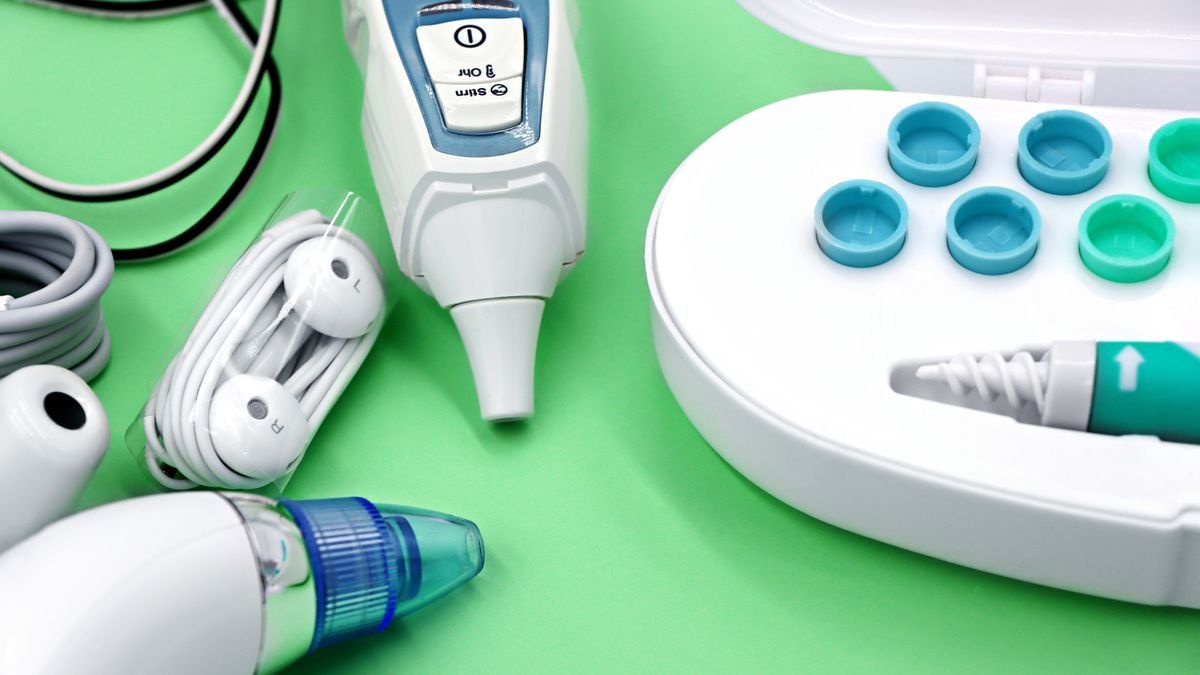
An older person who answers the wrong question, stops going out, gets things wrong in the kitchen and seems withdrawn is routinely assumed to be developing dementia. Sometimes that is right. Often what has actually happened is that they cannot hear the question or see the hob.
Sensory loss is the most commonly missed explanation for apparent confusion in older people, partly because it comes on slowly and partly because people cover for it. This guide covers how to tell the difference, what registration and a sensory assessment unlock, the hearing aid problem nobody checks, dual sensory loss, falls, and the practical changes that make the biggest difference at home.
Why it gets mistaken for confusion
Untreated hearing loss looks a great deal like early cognitive decline from the outside. The person answers at a tangent, asks for things to be repeated then stops asking, mishears names and appointments, gets tired and irritable in company, and withdraws from the situations where it shows. Sight loss produces its own version: not recognising a face until someone speaks, missing a step, misjudging a cup, leaving food half-eaten because only one side of the plate registered.
Two things are worth holding onto. First, the two genuinely interact — untreated hearing loss is recognised as one of the largest modifiable risk factors for dementia, so this is not merely a misdiagnosis problem. Second, they can coexist: plenty of people have both dementia and sensory loss, and correcting the sensory part makes the dementia part markedly easier to live with.
The practical test is cheap. Book a hearing test and a sight test, both free on the NHS for over-60s, before accepting any conclusion about memory. If someone’s “confusion” improves with hearing aids and better lighting, you have your answer. If it does not, you have ruled something out and made the assessment for memory problems more accurate.
Registration: what it is and what it unlocks
Registration for sight loss starts with a Certificate of Vision Impairment (CVI), issued by a consultant ophthalmologist — not an optician and not a GP. It places someone in one of two categories: sight impaired (previously “partially sighted”) or severely sight impaired (previously “blind”). Neither term means no sight at all; most people registered as severely sight impaired can see something.
Registration itself is voluntary. The certificate goes to the council, which asks whether you want to be added to its register. Saying yes is generally worth it, because it is the key to a long list of practical things:
- A referral to the council’s sensory services team for an assessment.
- Blind Person’s Allowance (an extra tax-free amount) for those registered severely sight impaired.
- Evidence for benefit claims, including Attendance Allowance.
- Concessionary travel, a Blue Badge in many cases, and free NHS sight tests.
- Reduced-cost or free access to talking books, audio services and the RNIB’s library.
There is no direct equivalent register for hearing loss, though councils keep records and the same sensory services team covers deaf and hard-of-hearing people.
The sensory assessment — free, underused
West Sussex County Council has a duty to assess. A sensory assessment is normally done by a rehabilitation officer for visual impairment (a ROVI) or a sensory services worker, and it is not the same as a general care needs assessment — it is specialist and much more practical.
Expect it to cover mobility training (using a long cane or a symbol cane), kitchen and daily-living techniques, lighting and contrast in each room, equipment such as talking clocks, liquid level indicators, big-button phones and text-to-speech, and teaching rather than just supplying. A good ROVI will spend two hours in the house and leave the person able to make a cup of tea safely again. It is free, and you can ask for it directly without going through the GP.
Ask specifically for a deafblind assessment if both senses are affected — that carries its own statutory guidance and should be done by someone with specific training, not a general social worker.
Hearing aids and the problem nobody checks
Hearing aids are provided free on the NHS, including batteries and repairs, after an audiology assessment following a GP referral. That is the easy part. The failure comes afterwards.
An enormous number of hearing aids sit in drawers. The common reasons are all fixable:
- Flat or missing batteries. Free from the audiology department, and many GP surgeries and some libraries run collection points. Check the packet date.
- Blocked tubing or wax filters. A blocked aid sounds dead. Replacement tubing and filters are free from audiology.
- Earwax. A wax-occluded ear canal will defeat any aid. Ask the GP practice what the local route for wax removal is — provision varies and it is worth asking rather than assuming.
- It was never set up properly. Aids need fine-tuning after the first fitting. If someone says it “just makes everything loud”, that is a re-tuning appointment, not a reason to give up.
- Nobody can manage the fiddly bits. Arthritic hands and tiny batteries do not mix. Rechargeable aids exist; ask.
If someone in your family has hearing aids, physically check them this week: are they in, are they switched on, do they whistle when cupped in a hand (that means they are working), and when was audiology last seen? RNID runs information services and local volunteer-led hearing aid support sessions in many areas. Care workers should be checking aids are in and working at the start of every visit — if that is not in the care plan, put it there.
Find care near you
Tell us your postcode and what you need help with. We pass your details to one vetted CQC-registered agency in your area — you are told who they are, and that they pay us a fee, before anything is sent.
Dual sensory loss
Losing both senses is not simply two problems added together. Each sense normally compensates for the other — you lip-read without noticing when hearing is poor, you use sound to orient when sight is poor. Lose both and the compensation disappears, which is why deafblindness is treated in law as a distinct disability with its own assessment requirements.
It is far more common in older people than most families realise, and it is usually gradual: age-related macular degeneration alongside age-related hearing loss. The signs are isolation, a collapse in confidence outdoors, and a person who seems to have stopped engaging entirely. Sense is the national charity for people who are deafblind and is the right first call; the council’s sensory team should also be involved.
Falls, and why sight loss drives them
Visual impairment is a well-established risk factor for falls, and the mechanism is mundane: edges, steps, kerbs and changes of level become invisible before anything else does. Contrast goes before acuity for many people.
Three specific traps: bifocal and varifocal glasses on stairs (the lower lens blurs the step — a separate pair of single-vision distance glasses for stairs and outdoors is a standard recommendation); poor lighting on landings and in halls; and a home where everything is the same colour. Read falls prevention at home alongside this.
Practical changes that actually work
Contrast does more than magnification. The principle is simple: make the thing a different colour from what is behind it.
| Where | Change | Why |
|---|---|---|
| Stairs | Contrasting nosing on each step edge; light at top and bottom | Steps become visible as separate objects |
| Bathroom | Coloured toilet seat, dark grab rails on a pale wall, a dark bath mat | White on white is invisible; this alone prevents falls and accidents |
| Kitchen | Dark chopping board for pale food and vice versa; tactile bump-on markers on cooker dials; liquid level indicator | Restores independent cooking and drink-making |
| Lighting | Brighter bulbs, task lamps at the chair and the worktop, no bare bulbs or glare, blinds to control low sun | Older eyes need far more light but are more sensitive to glare |
| Medicines | Large-print or tactile labels from the pharmacy; a dispenser with distinct compartments | Mistakes here are the ones that cause admissions — see medication management |
| Everywhere | Keep things in fixed places and tell the person when anything moves | Memory of layout replaces sight; a moved chair is a trip hazard |
Some of this qualifies for a Disabled Facilities Grant — up to £30,000 in England through Adur & Worthing Councils — though most of it costs very little. Occupational therapy through the council can supply and fit the smaller items.
How to communicate
The single most useful adjustment costs nothing.
- Get the environment right first. Turn the television off. Background noise destroys speech comprehension far more for someone with hearing loss than for you.
- Face the person, at their level, with light on your face — not behind you, which turns you into a silhouette.
- Slow down; do not shout. Shouting distorts. Rephrase rather than repeating the same words louder.
- Say who you are as you come in, and say when you are leaving the room. Someone with sight loss should not have to work out whether they are alone.
- Describe rather than point. “Your tea is at three o’clock, just past the plate” beats “it’s there”.
- One person at a time. Group conversation is where people with hearing loss disengage.
Put all of this in the care plan if a provider is involved, and check their staff have had sensory loss training — many have had none. See how to choose a home care agency. Isolation is the real risk here, and often the honest answer is not personal care but company: read companionship care and helping someone stay independent.
RNIB and RNID both run free national helplines and information services; Sense covers deafblindness; and Age UK West Sussex can help with benefit claims, including Attendance Allowance at £76.70 or £114.60 a week, which is not means-tested and which sensory loss on its own can support.
Frequently asked questions
Can hearing loss be mistaken for dementia?
Yes, and it frequently is. Untreated hearing loss produces tangential answers, apparent forgetfulness, withdrawal and irritability — all of which read as cognitive decline. Book a free NHS hearing test and sight test before accepting a conclusion about memory. Untreated hearing loss is also a recognised modifiable risk factor for dementia, so treating it matters either way.
What does being registered sight impaired give you?
A referral to the council’s sensory services team, Blind Person’s Allowance if registered severely sight impaired, supporting evidence for benefit claims, concessionary travel and often a Blue Badge, free NHS sight tests, and access to audio and library services. Registration follows a Certificate of Vision Impairment issued by a consultant ophthalmologist, and it is voluntary.
Are hearing aids free on the NHS?
Yes. After a GP referral to audiology, NHS hearing aids are provided free, along with batteries, tubing, filters and repairs. The usual problem is not cost but maintenance — flat batteries, blocked tubing, earwax or an aid that was never properly tuned. Check the aids physically rather than assuming they are working.
What is a sensory assessment and how do I get one?
A specialist assessment by the council’s sensory services team, usually a rehabilitation officer for visual impairment. It covers mobility training, daily living techniques, lighting and contrast, and equipment, and it teaches rather than just supplying. It is free, and you can request it from West Sussex County Council directly without a GP referral.
Does sight loss increase the risk of falling?
Considerably. Steps, kerbs and changes of level stop being visible before general vision fails. Three common traps are bifocal or varifocal glasses on stairs, poor lighting on landings, and a home where everything is the same colour. Contrasting stair nosings, task lighting and a separate pair of single-vision glasses for stairs all help.
The Care Panel is an independent publication. We are not a care provider and are not regulated by the Care Quality Commission, because we do not deliver care. Always check a provider’s own CQC registration and inspection report before you commit.
Written and fact-checked by The Care Panel. Last updated September 2026. Sources: RNIB on the Certificate of Vision Impairment and registration, RNID on getting and maintaining hearing aids, NICE guideline NG98 on hearing loss in adults, NHS guidance on sight and hearing tests, the Care Act 2014 and the deafblind statutory guidance, and gov.uk for Blind Person’s Allowance and Attendance Allowance. General information, not medical advice.