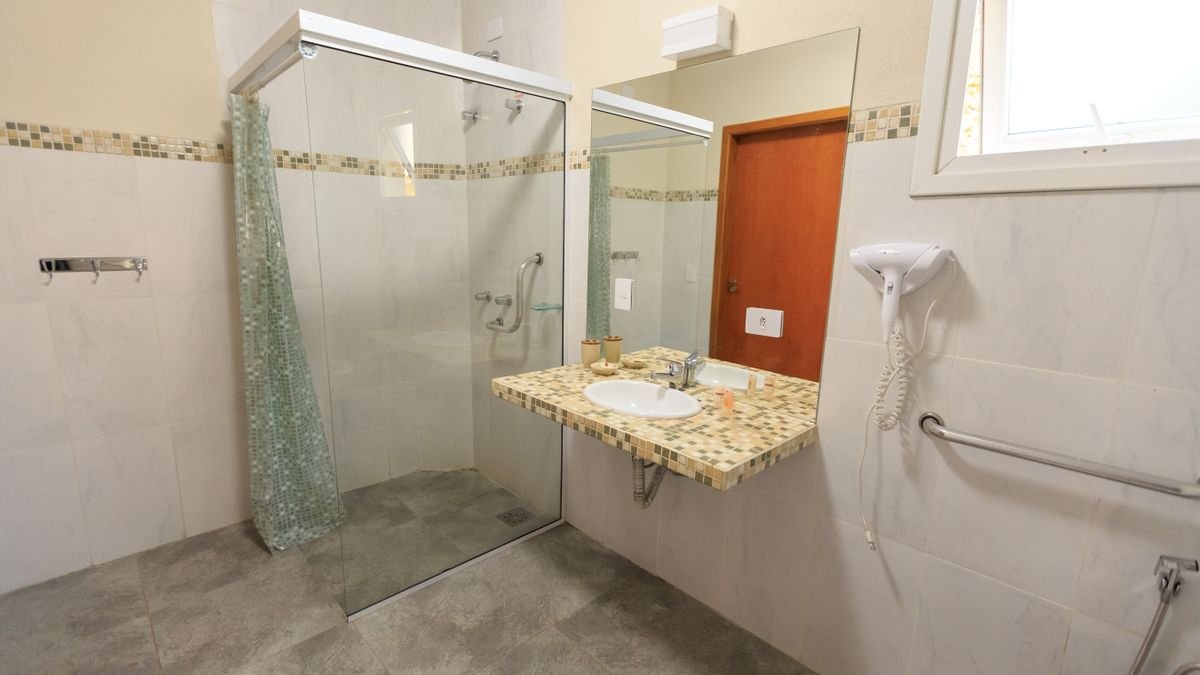
Free equipment for elderly people at home in West Sussex is available through West Sussex County Council. Aids such as raised toilet seats, perching stools, bath boards and grab rails are loaned free to permanent West Sussex residents who need them, often after a free home assessment by an occupational therapist.
By law, English councils cannot charge for community equipment or for minor adaptations costing £1,000 or less. Bigger changes, such as a stairlift or a level-access shower, may be funded by a Disabled Facilities Grant. If you buy equipment yourself, it may be free of VAT. This guide explains each route and what to do first.
What free equipment for elderly at home can you get?
Under the Care and Support (Preventing Needs for Care and Support) Regulations 2014, councils must not charge for community equipment (aids and minor adaptations). A minor adaptation is one that costs £1,000 or less. The equipment is not means-tested: what matters is whether the person needs it.
Typical items include:
- Bathroom: raised toilet seats, toilet frames, bath boards, shower stools, bath lifts
- Bedroom: bed rails, bed raisers, commodes
- Living room and kitchen: chair raisers, perching stools, trolleys
- Mobility: walking frames and some walking aids
- Minor adaptations: grab rails, stair rails, small ramps
Hospital beds, hoists and pressure-relieving mattresses may also be provided, usually on the advice of a nurse or therapist.
How to get equipment in West Sussex
West Sussex County Council loans equipment through its Community Equipment Service, free of charge to people who live permanently in West Sussex. Some items can be supplied after a phone conversation; others need a home assessment first.
- Contact Adults’ CarePoint on 01243 642121 (weekdays, 9am–5pm) or use the council’s online enquiry form. Explain the specific difficulties, for example “Mum can’t get off the toilet without help” or “Dad has fallen getting out of the bath twice.”
- Screening: the council decides whether equipment can be sent straight away or whether an occupational therapist needs to visit.
- Assessment and delivery: equipment is delivered and, where needed, fitted.
- Repairs and returns: phone the Community Equipment Service on 0345 127 2931.
If your relative is in hospital, the ward’s occupational therapist or physiotherapist usually arranges equipment before discharge. Our guide to care after hospital discharge covers this.
Occupational therapist home assessment
An occupational therapist (OT) looks at how a person manages everyday tasks in their own home, then recommends equipment, adaptations or different ways of doing things. Through the council or NHS the assessment is free.
During a visit the OT usually watches your relative do real tasks: getting in and out of a chair, bed, bath or shower, using the toilet, managing the stairs and moving around the kitchen. They measure furniture and doorways, and talk about falls, pain, fatigue and memory. It helps if a family member is there and if you have noted the specific problems you have seen.
Waiting times can be long. The Royal College of Occupational Therapists notes that NHS and social care routes may have waiting lists, and that private OTs can often see people sooner. A private OT must be registered with the Health and Care Professions Council (HCPC); you can check the register online and find practitioners through the RCOT directory. Ask what the fee covers, including travel and a written report.
An OT assessment often goes hand in hand with a care needs assessment, which looks at whether help from carers is also needed. See preparing for a care needs assessment for tips.
Stairlift cost in the UK
Stairlifts are rarely supplied free as community equipment, because they cost well over £1,000, but they can be funded through a Disabled Facilities Grant. If you are paying yourself, Which? gives these indicative 2026 prices:
| Option | Indicative cost | Notes |
|---|---|---|
| New straight stairlift | £2,000–£4,000 | Fitted on a single straight flight |
| New curved stairlift | £4,500–£8,000+ | Rail made to measure; each bend adds cost |
| Reconditioned stairlift | Usually much less than new | Mainly straight models; check the warranty |
| Rental | About £350–£1,500+ installation, then around £40 a month (straight) to £150+ a month (curved) | Can suit short-term or uncertain needs |
| Replacement batteries | About £85–£300 | May be needed every couple of years |
Get at least three quotes, ask for a home survey, check what servicing and call-outs cost after the warranty ends, and never sign on the day of a sales visit. Ask whether an OT has advised a stairlift at all: for some people a second banister, a bed downstairs or a through-floor lift is a better answer.
Disabled Facilities Grant for larger adaptations
A Disabled Facilities Grant (DFG) pays for adaptations such as stairlifts, ramps, wider doors, level-access showers and adapted kitchens. District and borough councils run DFGs. In Adur and Worthing the mandatory grant is up to £30,000, and Adur & Worthing Councils say discretionary top-ups of up to £40,000 more may be available for larger works.
The grant is means-tested, unless the disabled person receives certain means-tested benefits such as Guarantee Pension Credit or Universal Credit. The first step is an OT assessment arranged by West Sussex County Council through Adults’ CarePoint. Do not start any work before the grant is approved, or it may not be paid.
Our guide to home adaptations and the Disabled Facilities Grant covers the process in detail.
VAT relief on disability equipment
If you buy equipment yourself, it may be zero-rated for VAT, saving 20%. HMRC’s VAT Notice 701/7 allows this where the equipment is designed for disabled people and is bought for the personal use of someone who is “chronically sick or disabled”.
HMRC defines that as someone with a physical or mental impairment that has a long-term and substantial adverse effect on their ability to carry out everyday activities, or a condition doctors treat as a chronic sickness, such as diabetes. Its guidance says this does not include a frail elderly person who is otherwise able-bodied, or anyone only temporarily disabled, such as with a broken leg.
Qualifying items can include stairlifts, adjustable beds, hoists, some bathroom adaptations and alarm systems. The buyer, or a relative or other responsible person on their behalf, signs an eligibility declaration, which the supplier keeps.
People aged 60 or over who do not qualify as disabled may pay a reduced 5% VAT rate on certain mobility aids, such as grab rails, ramps, stairlifts, bath lifts and walk-in baths, but only when the item is supplied and installed together in their home. Full details are in HMRC’s guidance on VAT reliefs for disabled and older people.
Paying for equipment and care
Attendance Allowance is not means-tested and can help pay for equipment, alarms and care. The lower rate is £76.70 a week and the higher rate £114.60 a week in 2026/27. Use our free funding checker to see what your relative may be entitled to, and read our Attendance Allowance guide.
Equipment often works best alongside some practical help. Our guides to helping an elderly parent stay independent and personal alarms and telecare cover other ways to keep someone safe at home.
Find care near you
Tell us your postcode and what you need help with. We pass your details to one vetted CQC-registered agency in your area — you are told who they are, and that they pay us a fee, before anything is sent.
Frequently asked questions
Is equipment from the council really free?
Yes. Councils in England cannot charge for community equipment or minor adaptations costing £1,000 or less. In West Sussex it is loaned free to permanent residents who are assessed as needing it, and you return it when it is no longer needed.
Can I request an OT assessment myself?
Yes. Contact West Sussex County Council’s Adults’ CarePoint on 01243 642121 and explain the difficulties. You do not need a GP referral for a council assessment, though the GP can also refer.
Can I get a free stairlift?
Possibly, through a Disabled Facilities Grant, which is means-tested and starts with an OT assessment. Stairlifts are not usually supplied as free community equipment because they cost more than £1,000.
Does my elderly mother qualify for VAT relief?
Only if she is chronically sick or disabled under HMRC’s definition. Being older or frail alone is not enough. If she is 60 or over, she may get the reduced 5% rate on some mobility aids that are supplied and installed together.
How long does an OT assessment take to arrange?
It varies with demand and urgency, and there can be waiting lists. Tell the council about any falls or risks, as urgent cases may be prioritised. A private HCPC-registered OT is an option if you cannot wait.
The Care Panel is an independent publication. We are not a care provider and are not regulated by the Care Quality Commission, because we do not deliver care. Always check a provider’s own CQC registration and inspection report before you commit.
Written and fact-checked by The Care Panel. Last updated September 2026. Sources: The Care and Support (Preventing Needs for Care and Support) Regulations 2014; West Sussex County Council home loan equipment; Adur & Worthing Councils Disabled Facilities Grants; HMRC VAT Notice 701/7; Royal College of Occupational Therapists; Which? stairlift buying guide. General information, not financial, legal or medical advice — figures are indicative and subject to change.